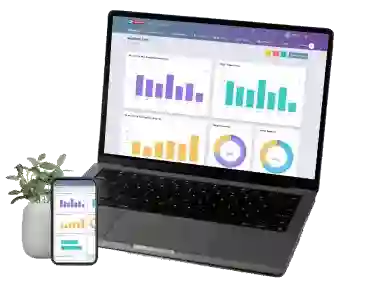

Every year, when admissions season hits, degree college staff across India go through the same cycle. Enquiry calls flood in. Application forms pile up. Merit lists get calculated on spreadsheets with formulas nobody fully trusts. Fee receipts get issued manually. And somewhere in the middle of all this, student data gets entered — and re-entered — into three different registers.
It doesn't have to be this way.
The right admissions software can take most of this off your plate. But here's the thing — most tools you'll find online are built for foreign universities or K-12 schools. They don't understand how Indian degree colleges actually work: the affiliating university norms, the category-wise reservation logic, the UPI fee collection, the pressure of June deadlines.
So we wrote this guide specifically for degree colleges in India — honest, practical, and to the point.
What this guide covers: What admissions software actually does, what to look for if you're an Indian degree college, and an honest comparison of available tools — including why we built College Pro ERP the way we did.
1. What Does Admissions Software Actually Do?
At its core, admissions software handles the journey from the moment a student shows interest in your college to the moment they're confirmed and enrolled. That includes:
- Collecting online applications with document uploads
- Managing and tracking each applicant's status
- Generating merit lists based on your criteria
- Sending confirmation letters and admission slips
- Collecting admission fees online
- Handing off enrolled student data to the rest of your system
Good software does all of this in one place, without your staff needing to copy data from one sheet to another. It also gives your principal and management real-time visibility — how many applications have come in, how many seats are filled, which courses are oversubscribed.
The thing that separates useful admissions software from fancy-but-useless admissions software is what happens after a student is admitted. If the tool doesn't connect with your fee system, your attendance module, and your exam records — you've just created a new data silo instead of solving one.
2. The Real Challenges Indian Degree Colleges Face During Admissions
Before we get into the software comparison, it helps to be honest about the actual pain points. Because if a tool doesn't solve these, it doesn't matter how good its UI looks.
Managing reservation categories is complicated
SC, ST, OBC, EWS, differently-abled, sports quota, NRI seats — Indian degree colleges juggle multiple categories with different eligibility rules, seat limits, and cutoffs. Doing this on a spreadsheet is error-prone and exhausting. Good software should handle this automatically.
Students apply to multiple colleges simultaneously
A student shortlisted on your merit list may not confirm. You need to quickly move to the next candidate. If your process is manual, this wastes days. Automated waitlist management is not a luxury — it's a necessity.
Document verification takes too much staff time
Mark sheets, transfer certificates, caste certificates, income certificates — verifying these for hundreds of applicants is genuinely time-consuming. A system that lets students upload documents online and flags missing ones automatically saves real hours every day during peak season.
Fee collection is chaotic without integration
Admissions and fees should not be two separate processes. When a student pays the admission fee, that should automatically reflect in their admission confirmation. Most colleges still handle this manually — which leads to confusion, duplicate receipts, or missed payments.
Affiliating university reporting has strict requirements
Once admissions are done, you need to submit student data to your affiliating university in their prescribed format. If your data is scattered, this becomes a nightmare. If it's centralised and clean, it takes minutes.
3. What to Look for — If You're an Indian Degree College
Here's a straightforward checklist. Any software you evaluate should tick most of these:
- Online application portal — customisable per course, accessible on mobile
- Automated merit list generation — with category-wise seat allocation
- Document upload and verification — with missing document alerts
- Fee integration — UPI, net banking, and card payments with auto-receipts
- Waitlist and seat vacancy management — automated, not manual
- University-compliant data export — for affiliation reporting
- Post-admission integration — data should flow into attendance, exams, and fees automatically
- Local support — someone who picks up the phone during admission season
One thing we hear from college staff all the time: "The software was fine but nobody helped us when we actually needed it." Don't underestimate how important responsive support is during the three weeks of peak admissions. Ask any vendor for their support response time — and talk to their existing customers.
4. Best Admissions Software for Degree Colleges in India (2026)
We've looked at the options available to Indian degree colleges — tools built locally and a few international ones that sometimes come up in searches. Here's our honest take on each.
1. College Pro ERP — Best for Indian Degree Colleges
College Pro was built specifically for degree colleges in India — not adapted from a foreign product, not repurposed from a school management tool. It handles admissions end-to-end: online applications, merit list automation with category-wise allocation, document management, fee collection via Indian payment gateways, and university-format data exports.
What makes it genuinely different is what comes after admission. The student data from admissions automatically flows into attendance tracking, examination management, fee records, and result publication. Your staff doesn't re-enter anything. Your management gets a single dashboard for the entire academic year — not just admission season.
It's not the flashiest product you'll find online. But it's built around how Indian degree colleges actually work — and that matters more than a slick demo.
Best for: Degree colleges, autonomous colleges, and affiliated colleges under Indian universities looking for a complete academic ERP — not just an admissions tool.
2. LeadSquared Education CRM — Good for Lead Management
LeadSquared is a well-known CRM in India that works well for tracking student enquiries, automating follow-up calls and messages, and managing the lead-to-application pipeline. It's widely used by private engineering and management colleges with large marketing teams.
The limitation for degree colleges is that LeadSquared is primarily a CRM — it handles the front end of admissions but doesn't deeply connect with fee management, attendance, or examination systems. You'd need separate tools for those, which means integration complexity and additional cost.
Best for: Colleges with a dedicated admissions marketing team focused on lead conversion. Not ideal as a standalone admissions + ERP solution.
3. Fedena — General College ERP
Fedena is an open-source-origin school and college management system that has been around in India for a while. It covers admissions, fees, attendance, and timetables with a reasonable feature set.
For degree colleges specifically, Fedena can require significant customisation to properly fit Indian university norms and reservation-based admissions logic. The support experience can vary depending on which implementation partner you work with — something worth asking about upfront.
Best for: Institutions comfortable with a more customisable but hands-on setup process.
4. Classter — International Platform
Classter is a cloud-based student management platform from Europe with a polished admissions module. It's well-designed and works well for institutions with global student intake.
The honest limitation for Indian degree colleges is localisation. Classter wasn't built with Indian university affiliation requirements, reservation categories, or UPI payment flows in mind. For colleges that need a platform that understands the Indian context from day one, Classter will require significant workarounds.
Best for: International or premium private institutions with global student intake. Not the natural fit for affiliated degree colleges.
5. Element451 — US-Focused Admissions CRM
Element451 is an AI-powered admissions CRM built for American universities — automated email journeys, AI chatbots, predictive enrolment analytics. A genuinely impressive product for what it does.
For Indian degree colleges, it's simply not the right fit. It doesn't handle Indian payment methods, university affiliation requirements, reservation-based merit lists, or post-admission academic management. We're mentioning it here because it appears in global comparison lists — but it wasn't designed for the Indian degree college context.
Best for: US or international universities focused on marketing-led recruitment. Not relevant for affiliated Indian degree colleges.
5. Side-by-Side Comparison
| Platform | Category-Wise Merit Lists | UPI / Indian Payments | Attendance Module | Exam & Results | University Export | India Support |
|---|---|---|---|---|---|---|
| College Pro ERP ★ | ✔ | ✔ | ✔ | ✔ | ✔ | ✔ |
| LeadSquared | ✗ | ✔ | ✗ | ✗ | ✗ | ✔ |
| Fedena | Partial | Partial | ✔ | ✔ | ✗ | Varies |
| Classter | ✗ | ✗ | ✔ | ✗ | ✗ | ✗ |
| Element451 | ✗ | ✗ | ✗ | ✗ | ✗ | ✗ |
Want to see how College Pro performs live? Book a free demo and we'll walk you through every feature in detail.
6. Why We Built College Pro the Way We Did
We've spent time inside degree colleges during admission season. We've seen what the staff goes through — the phone calls, the queues outside the office, the arguments about merit list calculations, the chaos when a student pays the fee but it doesn't get recorded in time.
Most software products treat admissions as a standalone process. Collect applications, generate a list, done. But for a degree college, admissions is just the beginning of an academic year. The same student whose application you processed in June needs to be in your attendance register in July, your exam hall ticket in October, and your results announcement in November.
College Pro connects all of that. When a student is admitted, they're already in the system — ready for the rest of the year. Your staff doesn't re-enter their name, their course, their category, or their fee details anywhere. It just flows.
A few things our users tell us matter most:
- The merit list runs in minutes, not days. With category-wise allocation built in, you set the criteria and the system does the calculation. No spreadsheet formulas, no manual checking.
- Students get a proper online experience. They apply from home, upload documents, track their status, and pay fees — without needing to visit the college before confirmation.
- The principal sees everything in real-time. Total applications, course-wise seat status, fees collected, pending documents — on one dashboard, at any hour.
- Support actually shows up during admission season. We know that's when it matters most, and we staff accordingly.
7. How to Actually Choose the Right Software
Here's practical advice before you sign anything:
- Ask for a live demo, not a slide deck. Any vendor worth their product will show you real screens and real workflows. If they stall on this, that's a red flag.
- Talk to a college that's already using it. Not a testimonial on their website — a real phone call with a real admin or principal. Ask how the onboarding went and how support responded during admission season.
- Check if it handles your affiliating university's reporting format. This is often an afterthought but becomes urgent after admissions close.
- Don't pay for features you'll never use. Some ERP vendors will sell you modules for research grants or alumni management. A degree college rarely needs those on day one.
- Ask about data migration. If you have years of student records in Excel, ask clearly how — and whether — the new system can bring that data in.
8. Frequently Asked Questions
What is the best admissions software for degree colleges in India? For affiliated degree colleges in India, College Pro ERP is the most purpose-fit option because it's built around Indian university norms, reservation-based admissions, and the full academic year. It handles admissions, fees, attendance, and exams in one connected system.
Can admissions software handle category-wise reservation and merit lists? Not all of them — this is where many international platforms fall short. College Pro handles SC, ST, OBC, EWS, and other quota categories automatically, generating category-wise merit lists and tracking seat availability in real-time.
Does admissions software integrate with fee collection? The better ones do. College Pro integrates admissions directly with fee collection — so when a student pays their admission fee via UPI or net banking, their admission is confirmed automatically and the receipt is generated without any manual step.
What happens to admission data after the student joins? In College Pro, the data doesn't stop at admission. Once enrolled, the student's profile automatically connects to attendance records, exam registrations, fee dues, and result management. You don't need to re-enter anything — that's what separates an ERP from just an admissions tool.
Is cloud-based admissions software safe for student data? Yes, provided the vendor uses proper encryption, role-based access controls, and regular backups. For DPDP Act compliance, it also helps if the data is hosted on servers within India. Always ask your vendor about their data storage location before signing up.
How long does it take to set up admissions software before enrolment season? With College Pro, most colleges are fully set up within one to two weeks — including course configuration, application form setup, fee structure, and staff training. The key is to start at least a month before your admissions open — get in touch with our team and we'll plan it together.