
College Management System for Degree Colleges in India — Everything You Need to Know
Running a degree college in India is not what it used to be.
Ten years ago, a college with 500 students could function reasonably well with a few registers, a handful of spreadsheets, and department heads who knew everything by memory. Today, that same college might have 3,000 students, six departments, fifteen staff in the admin office, an affiliating university that requires quarterly data submissions, a NAAC accreditation process underway, and parents expecting real-time updates on their child's attendance and fees.
The registers and spreadsheets haven't scaled. The workload has.
A college management system is what bridges that gap. Not a collection of separate tools cobbled together — a single, connected platform that handles everything a degree college needs to run smoothly, from the first day of admissions to the last day of the academic year.
This guide explains exactly what a college management system is, what it should do, what separates a good one from a mediocre one, and why College Pro ERP was built specifically for the Indian degree college context.
What this guide covers: What a college management system actually does, the core modules it should include, how everything connects together, what to look for when evaluating one, and how College Pro handles it for 100+ colleges across India.
1. What Is a College Management System?
A college management system is an integrated software platform that centralises and automates the administrative, academic, and financial operations of a degree college — replacing disconnected registers, spreadsheets, and standalone tools with one connected system.
The keyword here is integrated. A college management system is not just one tool that does one thing well. It is a platform where every function — admissions, student records, attendance, fees, examinations, transport, communication — is connected to every other function. Information entered once flows automatically to wherever it's needed.
In practical terms, this means:
- A student admitted through the admissions module is automatically enrolled in the student database — no re-entry
- Their attendance marked by a faculty member updates their profile in real-time
- Their fee payment reflects immediately in their student record and the accounts dashboard
- Their exam eligibility is automatically determined based on attendance and fee status
- Their transport fee shows up alongside tuition in their overall due statement
- A compliance report for the affiliating university is generated from the same data — no manual compilation
This is what a college management system does at its best. Not just faster paperwork — genuinely different operations.
2. Why Indian Degree Colleges Need a College Management System in 2026
The need for a college management system isn't new. What's new is the cost of not having one.
Regulatory pressure has increased significantly
NAAC accreditation now requires detailed data across multiple quality indicators — student enrollment, faculty qualifications, examination results, attendance, financial management. AISHE submissions happen annually. University affiliation renewals require student data in prescribed formats. The data burden on college administrations has multiplied in the last five years. Manual systems can't keep up without significant errors and staff overload.
Student and parent expectations have changed
In 2026, a student expects to check their attendance on their phone. A parent expects to receive a fee reminder before the due date. They expect an instant digital receipt when they pay. They expect a bonafide certificate to be ready within 24 hours, not a week. None of this is possible without a college management.
The cost of manual errors has grown
A wrong roll number on a university examination form. A fee payment recorded against the wrong student. An attendance register that doesn't match the university submission. These were inconveniences in a smaller college. In a college with 3,000 students and strict compliance requirements, they're genuine crises that cost time, money, and reputation.
Staff turnover creates institutional knowledge gaps
When an experienced admissions coordinator or accounts head leaves, they take years of institutional knowledge with them. Which register has what data. How the fee structure was organised three years ago. Where the documents from the 2021 batch are stored. A college management makes this knowledge institutional rather than personal — it lives in the system, not in someone's memory.
Competition for students has intensified
Degree colleges in India are competing for students more directly than ever before. Colleges that offer a smooth, digital experience — online admissions, instant receipts, mobile attendance access — are increasingly preferred over those that still require students to visit the office for every administrative task.
3. Core Modules of a College Management System
A college management is only as good as the modules it includes and how well they connect. Here's what every complete college management should cover:
Admissions Management
The starting point of every student's journey. A good admissions management system handles online applications, document collection and verification, merit list generation with category-wise allocation (SC, ST, OBC, EWS, management quota), waitlist management, and fee collection at the point of admission. When a student is admitted, their data flows automatically into the student database — no manual transfer.
Student Management
The central module that everything else connects to. The student management system maintains complete student profiles — personal details, academic background, enrollment status, course and batch information, document records, and compliance data. Every other module reads from and writes to this central student record.
Attendance Management
Daily attendance across all classes and subjects, marked digitally by faculty. The attendance management system tracks subject-wise and overall attendance per student, generates shortage lists automatically, sends alerts to students and parents when attendance falls below the required threshold, and feeds into exam eligibility determination without any manual process.
Fee Management
End-to-end fee collection — from fee structure setup to payment processing to receipt generation to outstanding dues tracking. The fee management system supports UPI, net banking, and card payments. Automatic reminders go to students and parents before due dates. Every payment updates the student's profile in real-time. Scholarship and concession management is handled with proper approval workflows. Audit-ready ledgers are always available.
Transport Management
Route planning, student-to-route assignment, driver and vehicle records, compliance document tracking, and transport fee management — all in the transport management system. Transport fees are part of the student's overall fee account, not tracked separately.
Campus Management
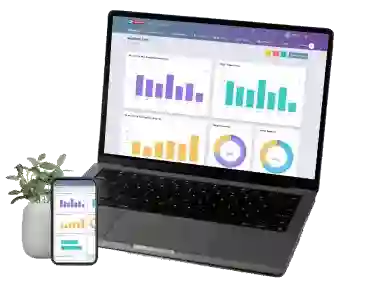
The umbrella module that gives management and the principal a complete view of all college operations — enrollment status, attendance trends, fee collection progress, examination schedules, resource utilisation. The campus management system connects all departments and generates the compliance reports needed for university affiliation, NAAC, AISHE, and NIRF.
4. What Makes a college management Actually Work — and What Doesn't
There's an important distinction between college management software that looks good in a demo and one that actually improves operations on the ground. Here's what separates them:
Integration depth — not just data sharing
Some college managements are collections of separate tools that share data through an API or manual export. This is better than nothing, but it's not true integration. True integration means one database, one student record, one source of truth. When attendance is marked, it updates the student profile, the attendance report, the exam eligibility check, and the parent notification — all from the same action, with no intermediate step.
College Pro was built as one integrated platform from the beginning. There is no "fee module that connects to the student module." There is one system where fees and students and attendance and exams are all part of the same data layer.
India-specific design vs adapted foreign software
Many college managements in the Indian market are either school management tools adapted for colleges, or foreign university platforms adapted for India. Neither works cleanly for an Indian degree college.
Indian degree colleges have specific requirements — reservation-based admissions, university affiliation compliance, UPI payments, semester and annual examination patterns, NAAC accreditation requirements, AISHE data formats. A system designed for a European university or an Indian school will require significant workarounds to handle these.
College Pro was designed from the ground up for Indian degree colleges — not adapted from anything else. Every feature reflects how Indian degree colleges actually operate.
Support quality during peak periods
A college management is most critical during three periods: admission season, examination time, and year-end reporting. These are also the periods when things are most likely to go wrong — high transaction volumes, time pressure, staff stress. Support quality during these specific periods matters enormously.
Ask any vendor you evaluate: what is your support response time during admission season? Can you speak to a college that used your support during their last admission cycle? The answers will tell you a great deal about the actual quality of the product.
Ease of use for non-technical staff
College admin staff are not software engineers. A college management that requires extensive technical knowledge to operate will either be poorly used or abandoned. The most important usability test is not whether the system can do something — it's whether your accounts clerk or admissions coordinator can do it without calling for help.
5. How College Pro's college management Connects Everything
College Pro is built around one central idea: a degree college should have one connected platform where every operation — admissions, students, attendance, fees, transport, exams — is part of the same system.
Here's how that connectivity works in practice across a full academic year:
June — Admissions Season
Students apply online. Documents are uploaded. Merit lists are generated automatically with category-wise allocation. Students confirm admission and pay the admission fee online. Their profile is created in the student management system automatically. No re-entry. The accounts dashboard shows admission fee collection in real-time.
July — First Month of Classes
New students are already in the attendance system. Faculty begin marking attendance from day one. The principal can see class-wise and subject-wise attendance on the dashboard without asking anyone to compile a report. Fee reminder notifications go out automatically to students who haven't paid the first instalment.
August–October — Mid Semester
Attendance data accumulates automatically. Students below the threshold receive alerts. Parents receive notifications. The accounts team tracks fee collection progress from the dashboard. Transport fee dues appear alongside tuition dues in the student's overall account. No separate tracking.
November — Examination Season
The exam section checks eligibility automatically — students with attendance shortfalls or fee dues are flagged without any manual cross-checking between departments. Hall tickets are generated from the student management system. Internal marks are entered by faculty directly.
December–January — Results and Reporting
Results are published through the system. Year-end compliance reports — university affiliation data, AISHE format, NAAC documentation — are generated directly from the college management. What previously took a week of manual compilation takes one afternoon.
What principals and management tell us after switching to College Pro:
- The most significant change is visibility — seeing what's actually happening across the college in real-time, without waiting for someone to compile a report
- Admission season is genuinely less stressful because the system handles the volume that previously required overtime
- Fee collection has improved significantly because automatic reminders reach students and parents consistently, not whenever someone remembers to follow up
- University data submissions are no longer a crisis because the data is always clean and ready
Book a free demo to see how College Pro's college management works as one connected platform — we'll walk through a full academic year in the demo.
6. college management vs ERP — Are They the Same Thing?
You'll hear both terms used in the Indian education technology market. Here's the practical distinction:
An ERP (Enterprise Resource Planning) is the broader category — software that integrates all business processes of an organisation into one system. In a manufacturing company, an ERP connects procurement, production, inventory, sales, and finance.
A college management is an ERP built specifically for educational institutions — connecting admissions, student management, attendance, fees, examinations, transport, and reporting in one platform.
In practice, when vendors in India say "college ERP" or "college management," they mean the same thing. The terms are interchangeable. What matters is not the label — it's whether the system genuinely integrates all the functions your college needs, or whether it's a collection of loosely connected tools marketed as an ERP.
College Pro is a college management system — or college ERP, same thing — built specifically for degree colleges in India. Every module was designed for the Indian degree college context and connected to every other module from the beginning.
7. How to Choose the Right College Management System for Your Institution
Before you sign anything, here's a practical evaluation framework:
Step 1 — Define your actual requirements List the specific problems you're trying to solve. Not "we want better technology" — "our fee reconciliation takes three days every month" or "our attendance data isn't connected to exam eligibility." Specific problems lead to specific evaluations.
Step 2 — Ask for a live demo with your actual data Any vendor worth evaluating will demonstrate the system using scenarios from your college — your fee structure, your courses, your typical workflows. A demo using generic sample data tells you very little about how the system will actually work for you.
Step 3 — Talk to an existing customer in a similar college Not a testimonial on the website. A direct phone call with a principal or admin head from a college similar to yours. Ask specifically: how was the onboarding? What went wrong? How did support respond? What do you wish you'd known before you signed?
Step 4 — Check India-specific functionality Can it handle category-wise seat allocation and reservation management? Does it support UPI and domestic payment gateways? Does it generate reports in AISHE, NAAC, and your affiliating university's formats? Does it handle both semester and annual examination patterns? If the answer to any of these is "not currently, but it's on the roadmap," that's a red flag.
Step 5 — Understand the implementation and support model Who manages data migration from your existing records? How long does setup take? What training is provided and for which staff roles? What is the support response time during admission season — the period when you'll need help most?
Get in touch with our team to discuss how College Pro fits your specific requirements — we'll give you honest answers to all of these questions.
8. Frequently Asked Questions
What is a college management system? A college management system is an integrated software platform that centralises and automates all administrative, academic, and financial operations of a degree college — admissions, student records, attendance, fees, examinations, transport, and reporting — in one connected platform. College Pro's college management system connects all of these as part of one ERP built specifically for Indian degree colleges.
What is the best college management system for Indian degree colleges? For Indian degree colleges, College Pro ERP is the most purpose-built option because it was designed specifically for the Indian higher education context — handling reservation-based admissions, UPI fee collection, university affiliation reporting, NAAC and AISHE compliance, and the full academic year in one connected platform. The campus management system connects all modules into one operational view.
What modules should a college management system include? A complete college management system should include admissions management, student management, attendance management, fee management, transport management, examination management, and campus-wide reporting. In College Pro, all of these are part of one integrated platform — not separate tools. The student management system is the core that every other module connects to.
How is a college management system different from school management software? School management software is designed for K-12 institutions and their specific workflows — timetables, parent communication, report cards. A college management system is designed for higher education — handling university affiliation compliance, reservation-based admissions, semester examinations, NAAC accreditation data, and the complexity of running multiple degree programmes simultaneously. Using school software for a degree college requires significant workarounds that create more problems than they solve.
How long does it take to implement a college management system? With College Pro, most colleges are fully operational within one to two weeks — including data migration from existing records, configuration, and staff training. The ideal time to implement is 4–6 weeks before the next admission season. Book a free demo and we'll plan the implementation timeline around your academic calendar.
Can a college management system handle multiple courses and batches simultaneously? Yes. College Pro handles multiple degree programmes (B.A., B.Sc., B.Com., BCA, and others), multiple batches, multiple shifts, and category-wise enrollment across all of them simultaneously. The campus management system gives management a consolidated view across all programmes without losing course-specific detail.
Is a cloud-based college management system safe for institutional data? College Pro uses encrypted data storage, role-based access controls, and regular backups. All data is stored on servers within India, supporting DPDP Act compliance. Every action in the system is logged with a timestamp and user ID. Only authorised staff can access specific data — a faculty member sees attendance and marks, the accounts team sees fee records, the principal sees everything through the management dashboard.
What happens during a system outage? College Pro runs on a secure cloud infrastructure with high availability and regular backups. In the unlikely event of a temporary outage, all data is preserved and accessible once connectivity is restored. No data is stored only on local devices — everything is in the cloud, encrypted, and backed up with redundancy.